.svg)

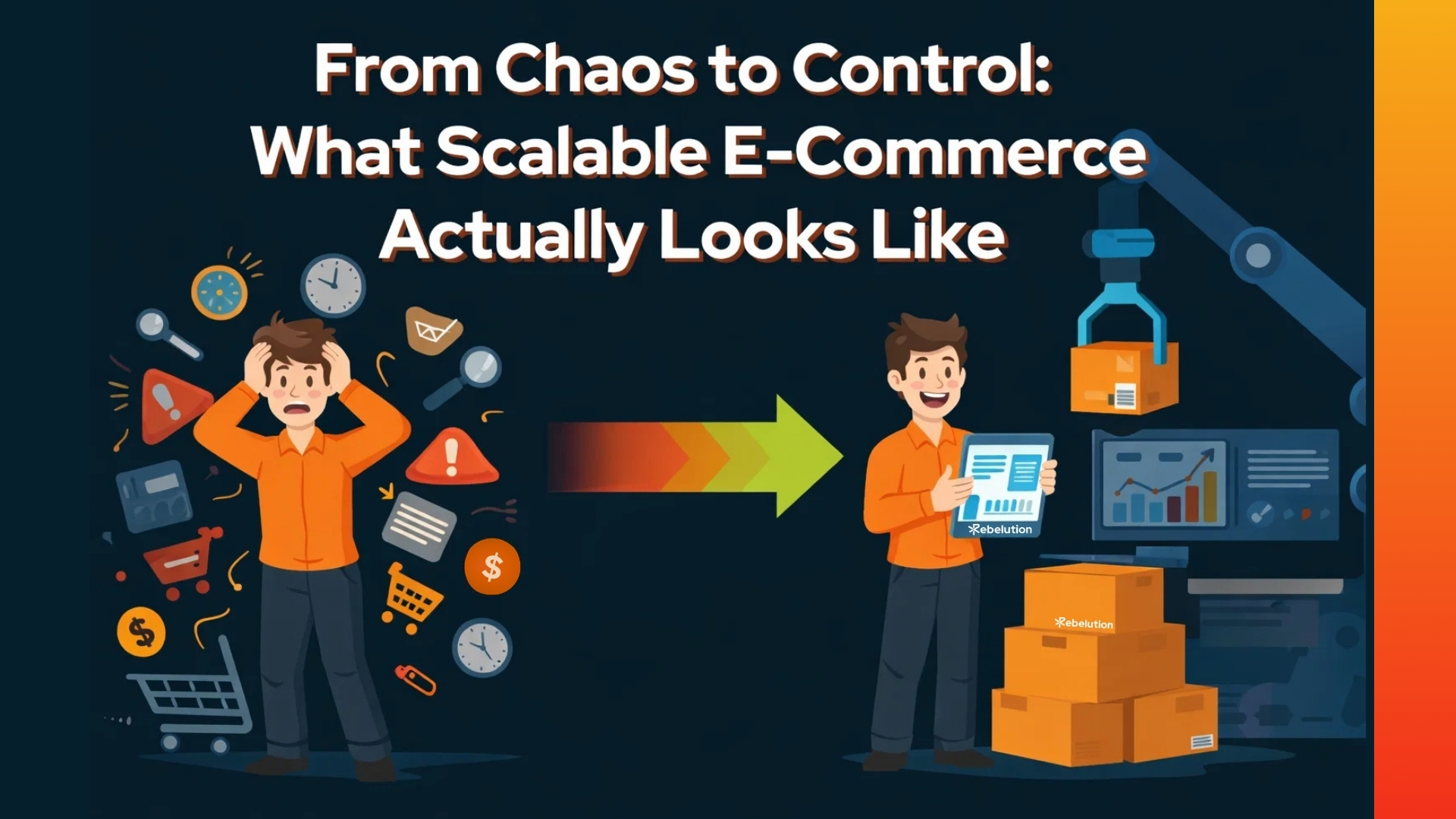
In the world of online retail, scalable e-commerce operations are the difference between brands that thrive and brands that buckle under success. Revenue growth feels like proof of momentum, but if operations can’t keep up, that momentum turns into chaos: stockouts, delivery delays, stressed teams, and compressed margins. For U.S.based brands selling across marketplaces like Amazon, Walmart, Wayfair, Home Depot, Lowe’s, and Overstock, understanding what operational scalability really means isn’t optional, it’s strategic.
Most founders and leadership teams celebrate revenue growth without asking how resilient the underlying systems are. Revenue can increase through marketing, new products, and seasonal demand, but if your processes and technology don’t scale with demand, you’ll be stuck in reactive mode, constantly troubleshooting fires instead of running strategically. That’s the heart of e-commerce operations: increasing complexity without increasing headaches or costs.
A great operational framework keeps customer experience consistent even as order volume increases. Without this, growth becomes unpredictable and expensive. The logic here aligns with how Salesforce describes scaling: operations must support growth with efficiency and automation, not lag behind it.
In the early days, founders and small teams wore every hat. You might manually process orders, troubleshoot customer tickets, and manage inventory spreadsheets. This hustle is essential as it builds intuition, but it doesn’t scale. At higher volumes, this approach breaks. For example:
True scalable e-commerce operations replace ad-hoc hustle with repeatable processes and centralized systems so your team can manage complexity without burning out or scaling headcount at the same rate as sales.
As brands move from early growth into the tens of millions in Gross Merchandise Volume (GMV), certain stress points become unavoidable without intentional operational design:
These failure points aren’t abstract; they’re documented operational pain seen across growing brands. Fixing them requires an emphasis on systems thinking and automation, both of which are the foundation of a scalable e-com operation.
Teams must have clear roles and documented workflows. When individuals operate on tribal knowledge, scaling becomes fragile. Documented playbooks and training ensure continuity even as teams grow or change.
Processes must be optimized and repeatable. You’ll need workflows for product release, promotional spikes, and carrier exceptions. Breakdowns in process lead to bottlenecks and costly delays, especially in post-checkout execution.
Technology must be chosen with scale in mind. The systems that work at $1M often buckle in the face of high traffic, order surges, and multi-channel complexity. Scalable tech stacks connect inventory, order management, fulfillment, and analytics — and eliminate data silos.
This trifecta directly impacts your ability to expand without eroding margins.
Even the most capable teams hit scalability limits. Recognizing the signals early can save revenue and customer trust. Consider bringing in outside expertise like Rebelution if you see:
When these patterns appear, consulting or managed services from an experienced partner can introduce structure and best practices that internal teams haven’t yet developed. This is exactly where Rebelution e-Commerce adds value: operational discipline that prevents breakdowns and builds repeatable systems tailored to marketplace complexity.
We partner with growing brands to design and execute scalable e-commerce operations that hold up under real growth. From marketplace optimization to operational alignment across Amazon, Walmart, Wayfair, and beyond, we help leadership teams replace reactive workflows with systems built to scale.
If your brand is growing faster than your operations can support, it may be time to rethink the foundation. Connect with Rebelution e-Commerce to turn complexity into control and growth into something sustainable.

Digital Marketing Specialist & Analyst


Meghan is a digital marketing specialist and analyst at Rebelution eCommerce, focusing on internal strategies. With a strong background in market analysis and initiative development, she enhances internal communications and ensures marketing efforts align with business goals. Her strategic approach improves the efficiency and impact of Rebelution’s marketing operations.
.svg)



Outdated listings and messy categories can hurt sales. Learn five simple ways to refresh your product catalog and improve your e-commerce store.


Amazon’s A10 algorithm rewards operational excellence. Learn how inventory stability, fulfillment speed, and logistics strategy drive organic rankings and growth.
Rising FBA fees are eroding 1P margins. Discover how Direct Fulfillment helps Amazon vendors expand catalogs, protect profitability, and regain operational control.
Explore how Evolution Outdoor, in partnership with Rebelution, achieved a remarkable 65% increase in year-over-year sales...
Explore how Evolution Outdoor, in partnership with Rebelution, achieved a remarkable 65% increase in year-over-year sales...
.jpg)
Explore how Evolution Outdoor, in partnership with Rebelution, achieved a remarkable 65% increase in year-over-year sales...


.svg)